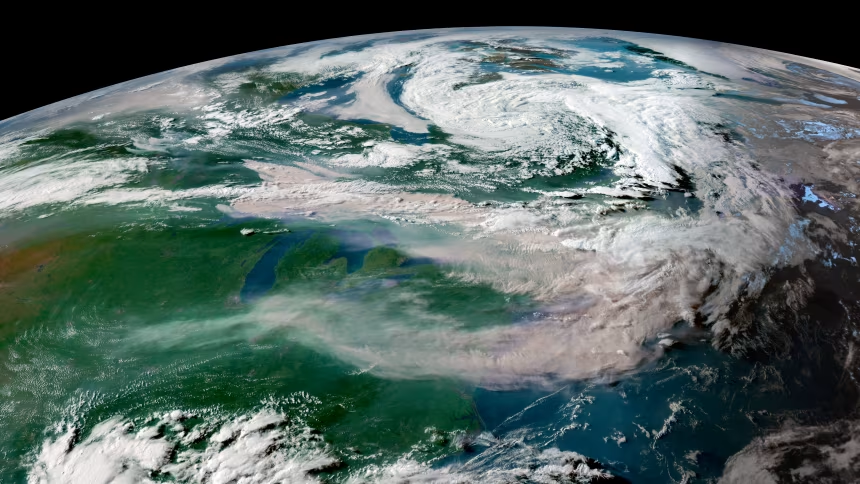
The U.S. Smoke Map: More Than 100 Million Under Alerts
The summer sky has taken a dramatic, hazy turn for a massive portion of the U.S. population. Thick plumes of smoke shrouded major metropolitan skylines on Wednesday, causing air quality indexes to plummet rapidly throughout the Northeast.
Environmental and weather agencies in New York and Boston immediately enacted air quality alerts, warning the public of unhealthy breathing conditions driven by high concentrations of fine particulates. Meanwhile, atmospheric models show the heaviest bands of smoke moving directly over the Great Lakes, prompting advanced warnings for major Midwestern hubs like Chicago and Detroit.
While stateside wildfires have already been an ongoing issue—burning more than 3.6 million acres primarily across the American West and Plains—this latest, ultra-dense layer of low-level pollution is descending entirely from our northern neighbors.
By the Numbers: The 2026 Wildfire Impact Status
To understand the scale of the current smoke crisis, the data reveals significant wildfire activity across both the United States and Canada:
| Region | Active Wildfire Metrics | Primary Impact Zones |
| United States | 3.6+ Million Acres Burned | Western States, Great Plains, Localized Midwest |
| Canada | Nearly 3,500 Fires | 4.8+ Million Acres Burned | Ontario Core (Drifting into Great Lakes & Northeast) |
| Population Risk | 100+ Million People Impacted | Midwest, Great Lakes, Mid-Atlantic, New England |
The Perfect Storm: Wildfires Meet the Central U.S. Heat Dome
While Canada’s current wildfire activity is not yet matching the historic, hyperactive levels seen during the record-breaking 2023 season, meteorologists point to a dangerous atmospheric combination causing this year’s severe ground-level impact:
- The Ontario Flare-Ups: A dozen intense, fast-moving blazes have ignited in Ontario over recent weeks, creating a concentrated column of heavy atmospheric ash and smoke.
- The Central U.S. Heat Dome: A massive high-pressure system sitting over the midsection of the country is acting as a weather block. This heat dome effectively steers the upper-level winds, drawing the Canadian smoke directly southward and trapping it close to the surface where millions of people breathe.
Climate Factors: Why Prolonged Smoke Seasons Are the New Normal
Environmental scientists warn that these hazy summers are no longer isolated anomalies. Planet-heating fossil fuel pollution is fundamentally changing atmospheric baselines, shifting the odds so that extreme wildfire events will occur with greater frequency and intensity.
Higher global temperatures dry out boreal forests, turning vast wilderness areas into highly combustible tinderboxes. As a result, the traditional “fire season” is transforming into an extended, unpredictable smoke season that routinely bridges international borders and impacts public health thousands of miles away.
Canadian wildfire smoke U.S. air quality। Great Lakes air quality alert, Northeast wildfire smoke updates, fine particulate pollution PM2.5, Midwest heat dome smoke, Canadian wildfires 2026.