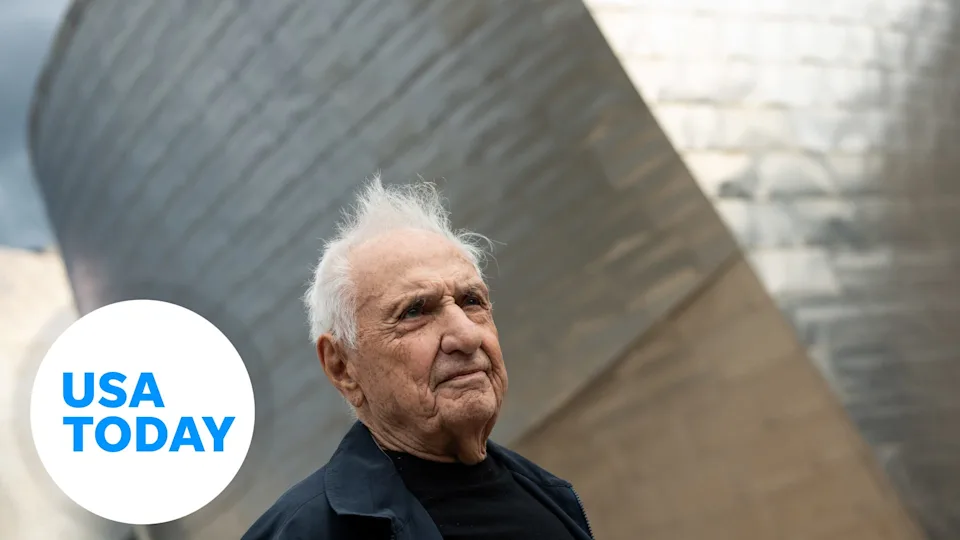
The recent passing of the visionary architect Frank Gehry at the age of 96 has prompted a global reflection on his unparalleled contribution to modern design. Yet, nowhere is his monumental architectural legacy more vibrant and accessible than in California, the state he called home. From the shimmering, kinetic forms of concert halls to revolutionary residential designs, Gehry’s buildings literally reshaped skylines and challenged conventions, cementing his reputation as the most celebrated American architect since Frank Lloyd Wright.
This comprehensive guide serves as your essential resource for exploring the most iconic Frank Gehry buildings in California. We delve into the unique history, deconstructivist style, and vital visitor information for these landmarks, ensuring a compelling and highly SEO-friendly experience for architecture enthusiasts, students, and tourists searching for “Frank Gehry California tour,” “most famous Frank Gehry designs,” “visiting Walt Disney Concert Hall,” and “impact of Frank Gehry’s architecture.”
🌟 The Deconstructivist Master: Understanding Frank Gehry’s Style

Born Ephraim Owen Goldberg in Toronto in 1929 and raised in Los Angeles, Frank Gehry’s architectural journey was fundamentally shaped by Southern California’s spirit of informality and artistic rebellion. After studying at the University of Southern California and Harvard, Gehry established his practice in L.A. in 1962.
His rise to global prominence in the late 1980s was defined by his pioneering deconstructivist architecture style. Moving past the rigid boxes of orthodox Modernism, Gehry embraced bold, sculptural forms—often clad in unconventional materials like corrugated metal, chain-link, and shimmering steel. These structures, seemingly fractured and reassembled, turned buildings into cultural landmarks, demonstrating a fluid interplay between architecture and sculpture. His California works, whether early experimental houses or monumental civic centers, provide a chronological map of this revolutionary shift in design. Gehry famously employed the CATIA software, originally developed for the aerospace industry, to translate his complex, fluid sketches and models into buildable, precise realities—a technical innovation that revolutionized the practice of architecture.
🗺️ The Definitive Tour: Frank Gehry’s Most Famous California Buildings
The Golden State is home to a magnificent collection of Gehry’s genius, showcasing his evolution from provocative early works to the global masterpieces of his later career.
1. Walt Disney Concert Hall – The Crown Jewel of Downtown LA
The Walt Disney Concert Hall is the undeniable centerpiece of the Gehry tour, attracting millions of visitors and architecture students annually.
- Address: 111 S. Grand Ave., Los Angeles, CA 90012
- Why It Matters (Keywords: Los Angeles architecture, civic landmark, deconstructivism, LA Philharmonic): Completed in 2003, the Concert Hall is a breathtaking stainless-steel spectacle. Its sweeping, billowing curves evoke the movement of sails—a nod to Gehry’s passion for sailing—and instantly became the centerpiece of downtown L.A.’s cultural revival. This building perfectly exemplifies the “Bilbao Effect” in the United States, where architecture transforms a city’s global identity. Beyond its stunning exterior, the auditorium is acoustically renowned, featuring an interior finished in warm Douglas fir that contrasts sharply with the exterior’s reflective steel.
- Visiting Info: How to Visit the Walt Disney Concert Hall: Free self-guided audio tours are typically available daily from 10 a.m. to 2 p.m., offering a detailed look at the acoustics and interior design. Guided tours may also be available by reservation. Always check the official LA Phil website for the most current schedule and performance times.
- Photo Tip: For the quintessential shot capturing its reflective power, position yourself at the corner of 2nd Street and Grand Avenue, or capture the intimacy of the hidden gardens and staircases accessible to the public.
2. Gehry Residence – Santa Monica (The Architectural Manifesto)
For those interested in the origins of Gehry’s style, his own home is the essential pilgrimage.
- Address: 1002 22nd St., Santa Monica, CA 90403
- Why It Matters (Keywords: early Gehry work, Santa Monica architecture, deconstructivist house, architectural manifesto): Purchased in 1977, Gehry’s transformation of this modest 1920s Dutch-style bungalow into his own home was an architectural declaration. He wrapped the original house in a new, violently fractured shell of unconventional, everyday materials: corrugated metal, chain-link fencing, plywood, and raw lumber. This radical renovation was controversial to neighbors but cemented Gehry’s position as a provocateur and an influential figure in the burgeoning deconstructivist movement. It is the first crucial stop for any Frank Gehry architectural style analysis.
- Visiting Info: Viewing the Gehry Residence: This remains a private home. Visitors can only view the exterior from the street. Please be highly respectful of the residents and the neighborhood’s privacy.
3. Loyola Law School – Los Angeles
An influential early demonstration of how Gehry could transform an institutional environment using a village-like approach.

- Address: 919 Albany St., Los Angeles, CA 90015
- Why It Matters (Keywords: Loyola Law School campus, Frank Gehry L.A. public spaces): Designed in the late 1970s and early 1980s, Gehry’s campus design broke from the formality of traditional academic architecture. It features a collection of simple, yet inventive, fragmented structures that define public spaces and walkways, showcasing his early experimentation with form and a focus on community interaction. It is a vital stop for understanding his transition from residential to large-scale institutional design.
- Visiting Info: Campus access is primarily for students and staff. Visitors should check the Loyola Marymount University (LMU) visitor policy for details on public access or tours.
4. Cabrillo Marine Aquarium – San Pedro
A community project showcasing his playful side with utilitarian materials in a coastal setting.
- Address: 3720 Stephen M. White Dr., San Pedro, CA 90731
- Why It Matters (Keywords: San Pedro landmarks, community architecture, Frank Gehry materials): Completed in 1981, this structure reflects Gehry’s unique ability to blend function with a whimsical, almost playful aesthetic, often utilizing materials associated with low-cost or industrial construction, like his signature use of chain-link. It is a fantastic example of his mid-career work focused on integrating with the coastal environment of the Los Angeles area.
- Visiting Info: Open Tuesday–Sunday, 12 p.m.–5 p.m. Admission is typically free, with donations encouraged.
5. The Rady School of Management (UC San Diego) – La Jolla
A late-career academic commission in Southern California demonstrating mastery of complex volumes.
- Address: 10057 Scholars Dr N, La Jolla, CA 92093
- Why It Matters (Keywords: UC San Diego architecture, La Jolla landmark, Gehry academic building): Located on the campus of the University of California, San Diego, this structure, particularly the Otterson Hall, bears Gehry’s unmistakable imprint, marrying the functional requirements of an academic building with his signature dramatic flair and sculptural volumes. It illustrates his lasting influence on modern university campus design, using complex geometry to foster dynamic indoor and outdoor spaces.
- Visiting Info: As an academic building on the public UCSD campus, the exterior is easily accessible for viewing. Check the university’s website for information on interior accessibility.
6. Facebook Campus Expansion (Meta) – Menlo Park
Gehry brings his signature aesthetic to the heart of Silicon Valley tech architecture.
- Address: 1 Hacker Way, Menlo Park, CA 94025
- Why It Matters (Keywords: Silicon Valley architecture, Facebook Headquarters design, tech campus): Known as MPK 20 and MPK 21, Gehry’s design for the tech giant’s expansion showcases a shift towards large, open, and collaborative workspaces. While still employing his distinctive aesthetic, the design focuses on human connection and nature, featuring a massive rooftop park. It represents a modern application of his complex forms to the needs of the digital age, prioritizing horizontal scale over vertical height.
- Visiting Info: This is a private corporate campus. Exterior views are possible from public areas, but the campus itself is generally closed to the public.
Bonus Gehry: The Binoculars Building – Venice, CA
A truly unique commercial building and a piece of functional art blending architecture and sculpture.
- Address: 340 Main St, Venice, CA 90291
- Why It Matters (Keywords: Venice Beach commercial design, Chiat/Day Building, Claes Oldenburg): Completed in 1991, the former Chiat/Day Building is known for the giant set of binoculars designed by artists Claes Oldenburg and Coosje van Bruggen that forms the entrance to its parking garage. This project highlights Gehry’s close collaboration with contemporary artists and his willingness to infuse commercial architecture with high-concept, playful art, making it a beloved Southern California landmark.
🏗️ The Enduring Gehry Legacy: Beyond the Buildings
Frank Gehry’s decades of work, particularly in Southern California, did more than just create stunning buildings; it forged a new architectural language. His exploration of unconventional forms and materials, driven by cutting-edge computer-aided design (CAD) technology like CATIA, transformed architecture into a sculptural art form on a massive, civic scale.
His designs, like the globally famous Guggenheim Bilbao and the Foundation Louis Vuitton in Paris, generated the “Bilbao Effect”—the widely studied phenomenon of architecture’s transformative power to turn a city into a cultural and economic destination. In California, landmarks like the Walt Disney Concert Hall continue to exemplify this profound impact, ensuring that the legacy of one of the 20th century’s most original minds remains tangible, visible, and infinitely explorable for generations to come. Searching for “Frank Gehry’s California architecture” is a search for the history of modern design itself.